I am the Belgian who stayed.
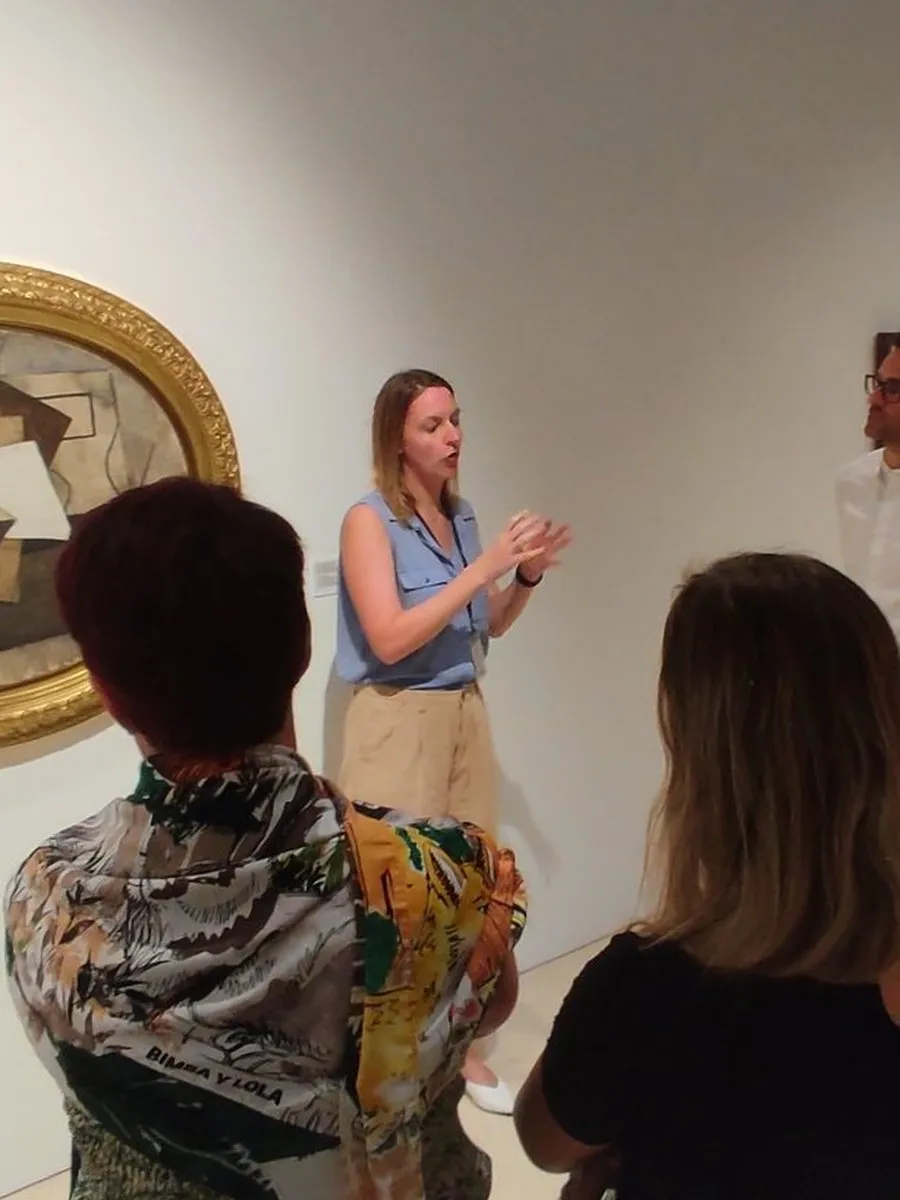
I came to Málaga twelve years ago, married a malagueño, and never left. Along the way I became an official tourist guide of Andalusia and spent six years in the education department of the Museo Picasso Málaga.
The education department is the part of a museum whose job is working out how to explain the collection — to a class of nine-year-olds, to a group of adults who have never set foot in a gallery, to a delegation of EU officials, to a workshop for people who are usually left out of places like this. Six years of that teaches you something no amount of reading does: which explanation actually lands, and which one only sounds good.
Now I run my own tours, in small groups, in the four languages I live in: English, Dutch, French and Spanish.
What I am after is simple. I am not here to convince you that Picasso was the greatest artist who ever lived. I want you to understand why he became so famous, why he is considered so important in art history, and what makes his work worth looking at in the first place.
My goal is that, by the end of the tour, you can look at a Picasso and actually have a way into it — rather than just nodding politely and wondering what you are supposed to see.